
WHEN TO SCRIPT A CORPORATE VIDEO: AND WHEN TO GO UNSCRIPTED
One of the questions that comes up regularly during corporate video production is whether the people appearing on camera need a script.
The answer depends entirely on what we're filming.
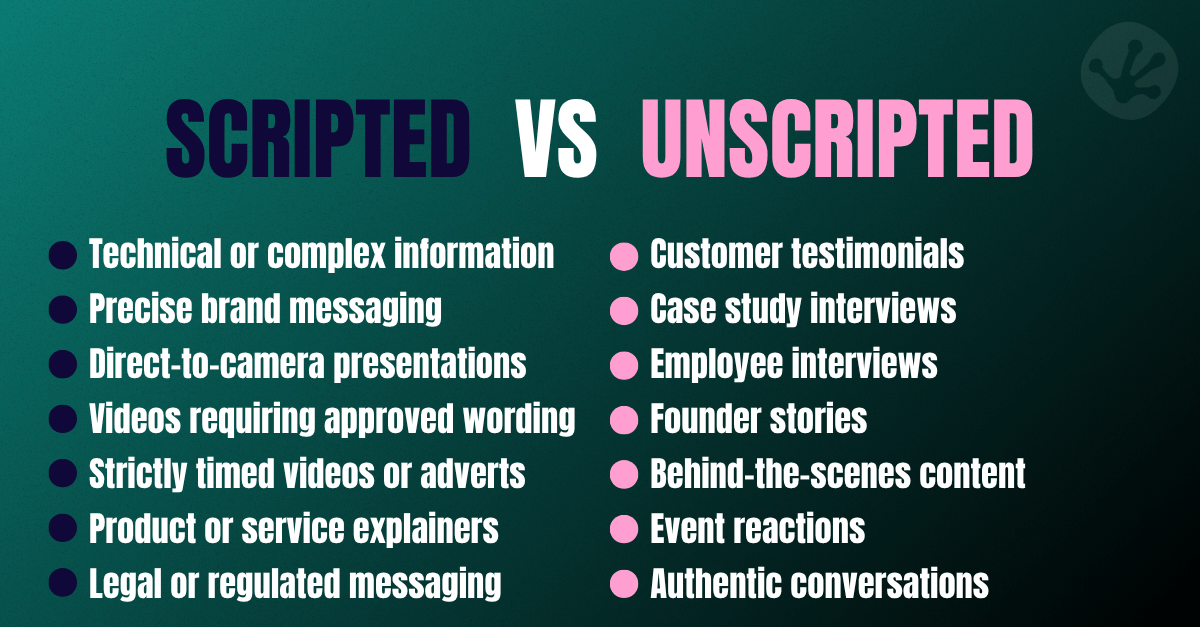
Some corporate videos need precise wording. There might be technical information to explain, key messages that have already been approved or a specific call to action that needs to be delivered correctly. In those situations, scripting can make the filming process considerably easier.
Other videos need almost the opposite. If we're filming a customer testimonial, interviewing an employee or capturing someone's genuine experience, handing them a script can quickly remove the personality that made their contribution valuable in the first place.
And there’s plenty of room between those two approaches. A corporate video script doesn't always mean memorising paragraphs before a shoot. We can use teleprompters, talking points, prepared interview questions or simply establish the subjects we want to discuss and let the conversation develop naturally.
The important part is deciding how much control each section of the video actually needs.
WHEN SHOULD YOU SCRIPT A CORPORATE VIDEO?
A full script works best when the exact information being communicated matters.
Imagine you're creating a corporate video explaining a technical product or process. There might be specifications that need to be correct, terminology that can't be changed or important details that would be easy to forget when somebody is standing in front of a camera.
Writing the script beforehand gives everyone an agreed version of what needs to be communicated. It also gives the video production team something to work with when planning shots, timings, graphics and the eventual edit.
That doesn't mean the presenter necessarily has to memorise every word. Depending on the person and the type of corporate video we're producing, we might use a teleprompter, break the script into shorter sections or record several variations of individual lines.
The objective isn't to get somebody to perfectly recite a page of text. It's to make sure the information is right while keeping the delivery as natural as possible.
SCRIPTING TECHNICAL OR COMPLEX INFORMATION
Technical subjects are particularly well suited to scripting because small changes in language can sometimes change the meaning completely.
If you're explaining engineering processes, financial information, software, regulations or detailed product features, relying entirely on an off-the-cuff explanation can create problems. The person speaking may know the subject inside out, but that doesn't necessarily mean they'll produce the clearest explanation the first time a camera is pointed at them.
A corporate video script gives you the opportunity to simplify that information before filming begins. Long explanations can be tightened, jargon can be removed where it isn't needed and the message can be structured around what the audience actually needs to understand.
SCRIPTING VIDEOS WITH STRICT RUNNING TIMES
A script also becomes useful when the finished video needs to fit a specific duration.
This is particularly relevant for video advertising, short promotional videos, social media campaigns and other content where you might only have 15, 30 or 60 seconds to communicate the message.
Someone answering naturally could explain the same point in twenty seconds or two minutes depending on the take. With a script, we can estimate the running time before filming and adjust the wording accordingly.
It's much easier to remove ten words from a script during pre-production than discover during the edit that your 30-second advert contains 55 seconds of dialogue.
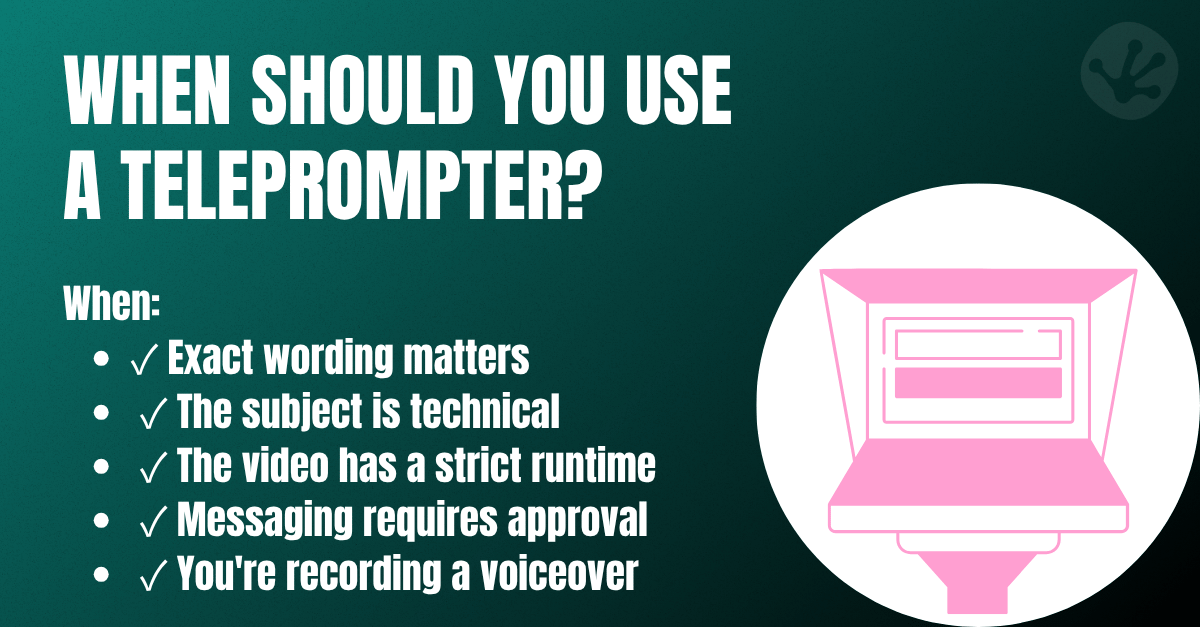
WHEN SHOULD YOU USE A TELEPROMPTER FOR A CORPORATE VIDEO?
A teleprompter can be extremely useful when a presenter needs to speak directly to camera while delivering specific wording.
Instead of memorising a corporate video script, the presenter reads it from a screen positioned around the camera lens. From the viewer's perspective, they're maintaining eye contact with the camera while the script moves in front of them.
For longer presentations, technical videos, announcements and pieces where wording has been carefully approved, this can make filming considerably more efficient.
However, a teleprompter isn't automatically the best option just because you've written a script.
Some people are brilliant with one. They can read naturally, change their pace, emphasise the right words and make the script sound as though they're simply talking to you.
Other people immediately start sounding like they're reading.
If that happens, forcing them through another ten takes usually isn't the answer. We might shorten the sections, turn the script into talking points or move towards an interview format instead.
The method should work around the person on camera, rather than expecting every person to perform in exactly the same way.
A TELEPROMPTER SCRIPT SHOULD SOUND LIKE SOMEBODY SPEAKING
One of the easiest ways to make a teleprompter sound unnatural is to write the script like website copy.
Written language and spoken language aren't quite the same.
When we speak, sentences tend to be shorter. We use contractions. We pause. We repeat ourselves occasionally. We place emphasis on words in ways that aren't always obvious on the page.
That's why a video script should always be read aloud during the writing process.
If a sentence feels awkward when you say it, it'll probably feel even more awkward when somebody is trying to deliver it naturally while looking into a camera.
Good corporate video scripting isn't just about getting the message onto paper. It's about writing that message in a way somebody can comfortably say.
USING SCRIPTED QUESTIONS FOR CORPORATE VIDEO INTERVIEWS
Not every corporate video needs scripted answers.
Often, scripted interview questions give us enough control without deciding exactly what the person should say.
This approach works particularly well for customer testimonials, case study videos, employee interviews, recruitment videos and other corporate video content where we want genuine opinions and experiences.
Before filming, we can identify the subjects the finished video needs to cover and prepare questions designed to bring those subjects into the conversation.
For a customer case study, for example, we might want to understand what problem they originally had, why they chose a particular company, what the experience of working together was like and what changed as a result.
We don't need to write their answers for them.
In fact, we probably shouldn't.
If a customer says they had a fantastic experience because we've handed them a piece of paper telling them to say they had a fantastic experience, the testimonial immediately loses some of its value. We'd much rather ask the right question and let them explain the experience in their own words.
GOOD INTERVIEW QUESTIONS CREATE BETTER ANSWERS
The way you phrase a corporate video interview question can make an enormous difference to the footage you get back.
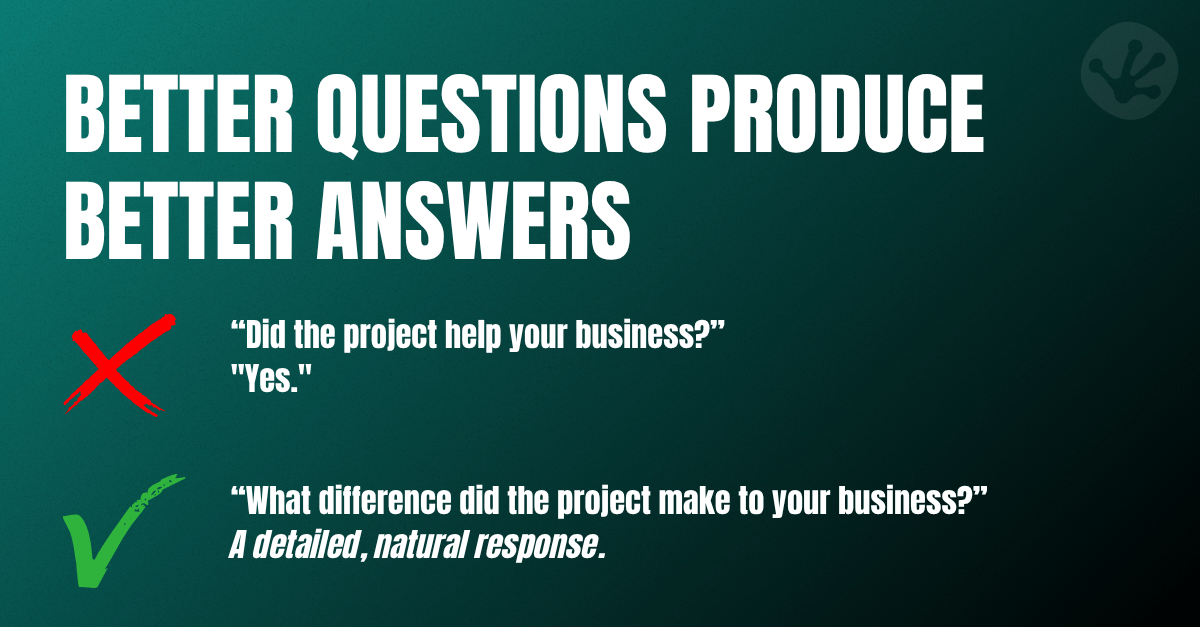
Questions that can be answered with yes or no aren't particularly useful.
Ask:
“Has working with the company helped?”
And there's every chance the answer will be:
“Yes, definitely.”
That might be true, but it doesn't give the editor much to work with.
Instead, ask:
“What difference has working with the company made to your business?”
Now you're encouraging the interviewee to explain what changed, why it mattered and potentially give examples.
The interviewer can then follow up on anything interesting that comes out of that answer. Perhaps they mention an unexpected benefit or tell a story we didn't know about beforehand. That's exactly where being prepared but not completely scripted becomes valuable.
We know what information we're looking for, but we're still leaving enough room for something better to emerge.
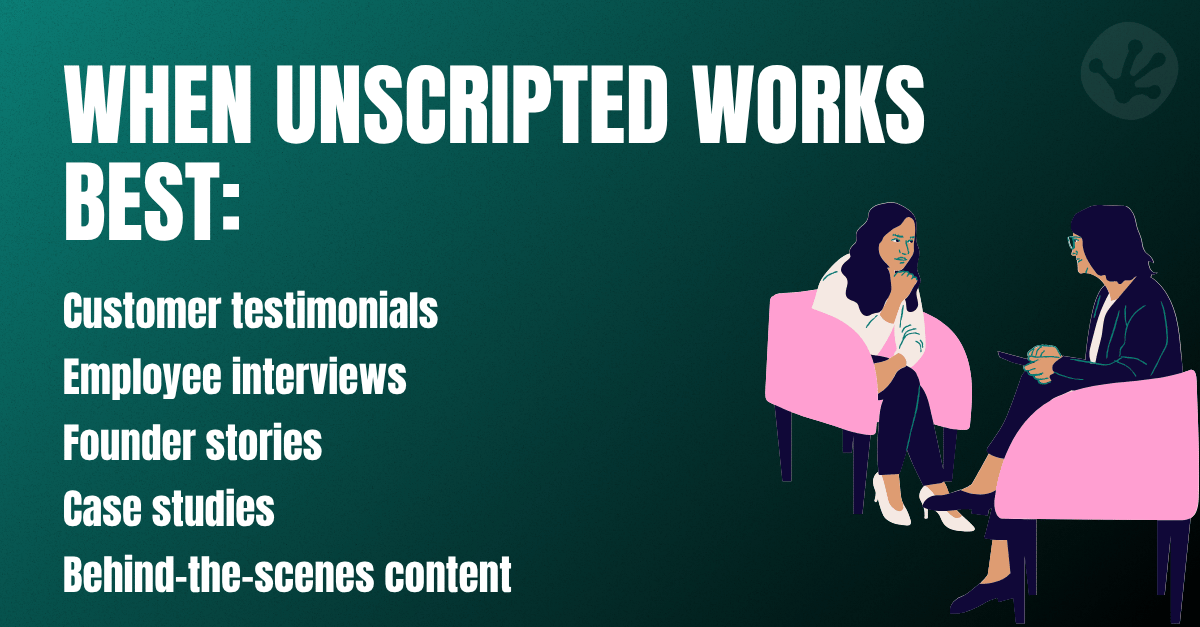
WHEN SHOULD A CORPORATE VIDEO BE UNSCRIPTED?
Unscripted corporate video works particularly well when the person's individual perspective is more important than precise wording.
Customer testimonial videos are perhaps the clearest example.
People can usually tell when somebody is repeating marketing copy. A genuine customer might phrase something slightly awkwardly, pause to think or use completely different language from the wording you'd put on your website. Those small imperfections can actually make their testimonial more believable.
The same principle applies to employee interviews, founder stories, case studies, behind-the-scenes videos and some types of thought leadership content.
If we're filming somebody because their experience, knowledge or personality is interesting, we don't necessarily want to replace their natural way of speaking with a script somebody else has written.
However, unscripted doesn't mean unplanned.
Before a corporate video shoot, we should still understand what the finished video is trying to achieve, which subjects need to be discussed and what kind of footage the editor will eventually need.
The difference is that we're planning the conversation rather than planning every word.
WHEN SHOULD YOU FREESTYLE VIDEO PRODUCTION?
There are also occasions where very little scripting or preparation is necessary.
Events are a good example.
If you're filming an exhibition, conference or company event, grabbing somebody immediately afterwards and asking what they thought can produce a much more interesting answer than scheduling a formal interview two weeks later.
Their reaction is immediate. The event is happening around them. There's energy in the environment and they haven't had time to overthink what they're going to say.
The same approach can work well for behind-the-scenes video content, quick social media videos and informal updates from members of a team.
But going off the cuff should be a deliberate creative decision, not an excuse to avoid pre-production.
If you're communicating something commercially sensitive, technically complicated or legally important, improvising probably isn't worth the risk. Likewise, if several stakeholders need to approve the messaging, it's usually much easier to establish that messaging before the shoot.
There is a big difference between a video feeling spontaneous and a video feeling like nobody planned it.
WHAT ABOUT TALKING POINTS INSTEAD OF A FULL SCRIPT?
Talking points are a useful middle ground and one we often prefer for people who know their subject well.
Instead of writing exactly what somebody should say, we identify the key points they need to cover. They then explain those points using their own language.
For example, somebody introducing their company might have five prompts:
What the company does
Who it works with
The problem it solves
What makes its approach different
What the viewer should do next
We know those five pieces of information need to appear somewhere in the finished corporate video, but the presenter doesn't need to remember a carefully constructed paragraph.
This can be particularly effective for founders, directors, subject-matter experts and other people who are comfortable discussing their work but become noticeably less comfortable when asked to recite somebody else's words.
Talking points also give us flexibility during filming. If an explanation is too long, we can ask for a shorter version. If something isn't clear, we can ask the presenter to explain it differently. If they say something particularly good, we can explore it further.
SCRIPTED VS UNSCRIPTED CORPORATE VIDEO: WHICH IS BETTER?
Neither.
They're simply different tools within corporate video production, and it's quite common for us to use several approaches within the same project.
During video production at Treefrog, we don't have one set approach to scripting. It depends on the type of video we're producing, the message we're trying to communicate and, importantly, the person who's going to be in front of the camera.
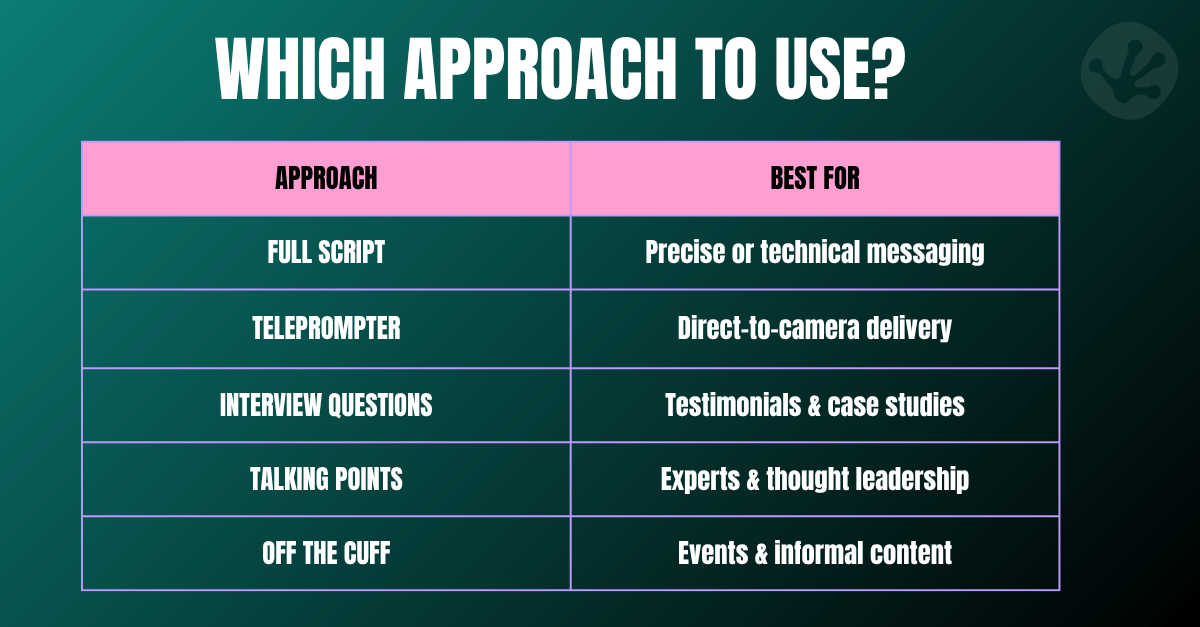
For videos where the wording needs to be precise, we'll usually lean towards a full script or teleprompter. This works particularly well for technical explanations, direct-to-camera pieces, promotional videos and anything where there are specific messages that need to come across clearly.
For customer testimonials and case studies, we'd usually take a different approach. Rather than telling someone what to say, we'll prepare questions around the subjects we want to cover and use those to guide the conversation. We can ask follow-up questions, explore interesting answers and give the person room to explain their experience in their own words. The result generally feels much more genuine than asking a customer to repeat something we've written for them.
Talking points can sit nicely between the two. If we're filming someone who knows their subject inside out, they might not need a complete script at all. Giving them the key points we need to cover can provide enough structure without changing the way they naturally communicate.
Then there are situations where we'll happily go completely off the cuff. Events, behind-the-scenes content and quick reactions can actually benefit from being less polished. If something interesting is happening, sometimes it's better to capture the moment rather than stop everything while we work out the perfect thing to say.
We can also combine all of these approaches within the same corporate video. A scripted introduction might lead into an unscripted interview, followed by a carefully planned call to action. We aren't tied to one method; we'll use whichever approach we think will get the best result for each part of the production.
A REAL EXAMPLE: OUR VIDEO PRODUCTION WITH TITAN WEALTH
A good example of why there isn't one correct approach to corporate video production is our work with Titan Wealth. When you're creating finance video content around subjects such as investment insights, market commentary, and financial information, there needs to be a clear understanding of what the video needs to communicate before filming begins. These aren't necessarily subjects where you want to turn the camera on and simply hope the conversation goes in the right direction.
At the same time, financial video content can quickly become difficult to engage with if every answer feels overly rehearsed or corporate. The people appearing in the video already have the expertise and understand the subject far better than we ever could, so our job isn't to replace that knowledge with words we've written for them. Instead, the production process needs to provide enough structure to make sure the important points are covered while still allowing that expertise to come through naturally.
That's an approach we regularly take with specialist businesses. The client brings the subject knowledge; we bring the video production experience. We can help shape how that knowledge is communicated, consider what will work on camera and make sure the finished video is clear and engaging without unnecessarily scripting the personality or expertise out of it.
Our work with Titan Wealth is a good example of how corporate video production can sit somewhere between completely scripted and completely spontaneous. When the people on camera genuinely know their subject, sometimes the most effective thing you can do is give that knowledge the right structure and then let them talk.
Watch some more of our corporate video work and others here.
HOW MUCH SHOULD YOU PREPARE BEFORE A CORPORATE VIDEO SHOOT?
First, it's worth deciding who is actually going to handle the scripting and planning.
If you're working with a video production agency, do you want to develop the script and messaging internally and bring it to the production team, or would you rather hand over the brief and let them take care of the planning?
At Treefrog, we're happy working either way.
Some clients want a completely hands-off approach. They know they need a corporate video and what they ultimately want it to achieve, but they don't necessarily want to spend their time writing scripts, developing interview questions or planning how everything will translate onto screen. In that situation, they can leave the process with us. We'll research the business and subject, develop the concept, plan the content and, where appropriate, write the corporate video script ourselves.
Other clients are dealing with a complex or highly specialised subject where they have knowledge that we simply couldn't replicate through external research. In those cases, it can make much more sense for the client to take the lead on the initial script or provide us with the technical information and key messages that need to be included.
That doesn't mean we'll simply take the script and start filming it word for word. We're always happy to give our feedback on how it might translate to video. Something that works perfectly in a document or presentation doesn't necessarily sound natural when spoken aloud, so we can help tighten sections, simplify the delivery and suggest where a teleprompter, talking points or interview format might work better.
Quite often, the best approach is collaborative. You bring the knowledge of your business and subject; we bring the video production experience. Between the two, we can work out what needs to be said, how it should be delivered and what needs to be planned before the cameras start rolling.
PLANNING A CORPORATE VIDEO? YOU DON'T NEED TO ARRIVE WITH A SCRIPT
If you're considering corporate video production, you don't need to have every word worked out before speaking to a video production company.
Working out what should be scripted is part of the process.
Sometimes the best approach will be writing a complete corporate video script and putting it onto a teleprompter. Sometimes we'll prepare a handful of questions and let the conversation do the work. Sometimes we'll give somebody a few talking points, start filming and discover that their first unscripted explanation is better than anything we could have written for them.
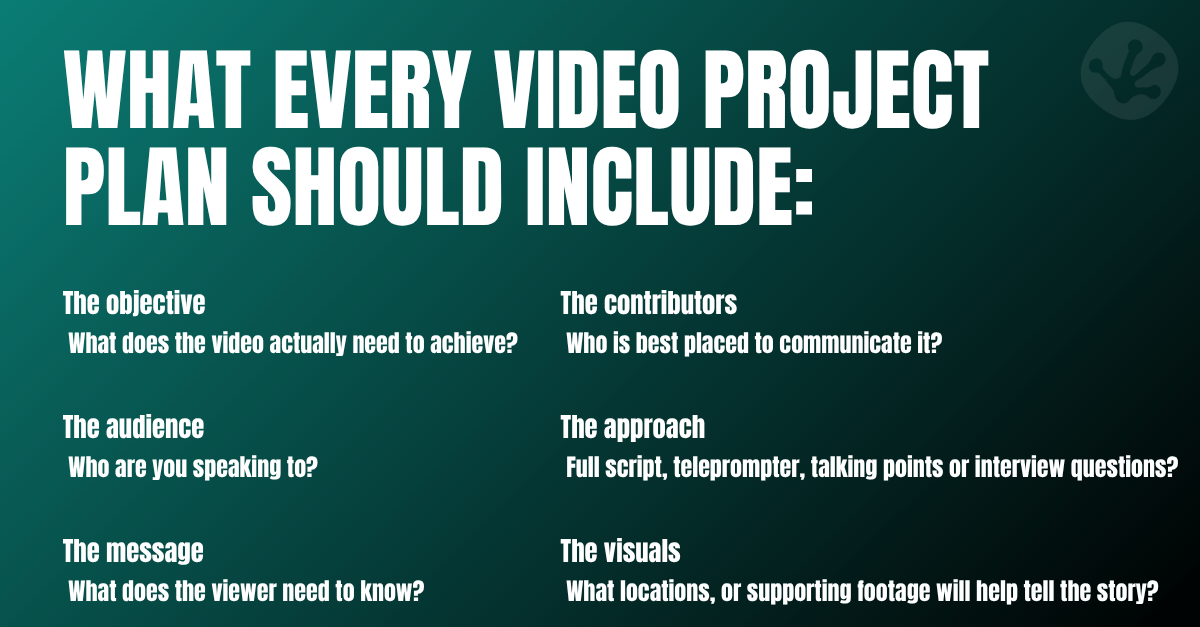
The important thing is understanding what the video needs to communicate, who needs to communicate it and how they're most comfortable doing so.
At Treefrog, we can help with the whole process, from developing the initial idea and deciding how much scripting is actually necessary through to filming, editing and delivering the finished corporate video.
Because the goal isn't to make somebody sound like they've memorised a great script.
It's to make them sound like themselves while making sure they say what the video actually needs them to say.
Reach out to Treefrog today to start rolling on your corporate videography.