
NAAME
VIDEO PRODUCTION & CONTENT CREATION
Producing professional video content across the East of England's manufacturing and engineering sector
When NAAME (New Anglia Advanced Manufacturing and Engineering) needed professional video content to capture the events, businesses and initiatives taking place across its network, Treefrog was brought in to help tell those stories.
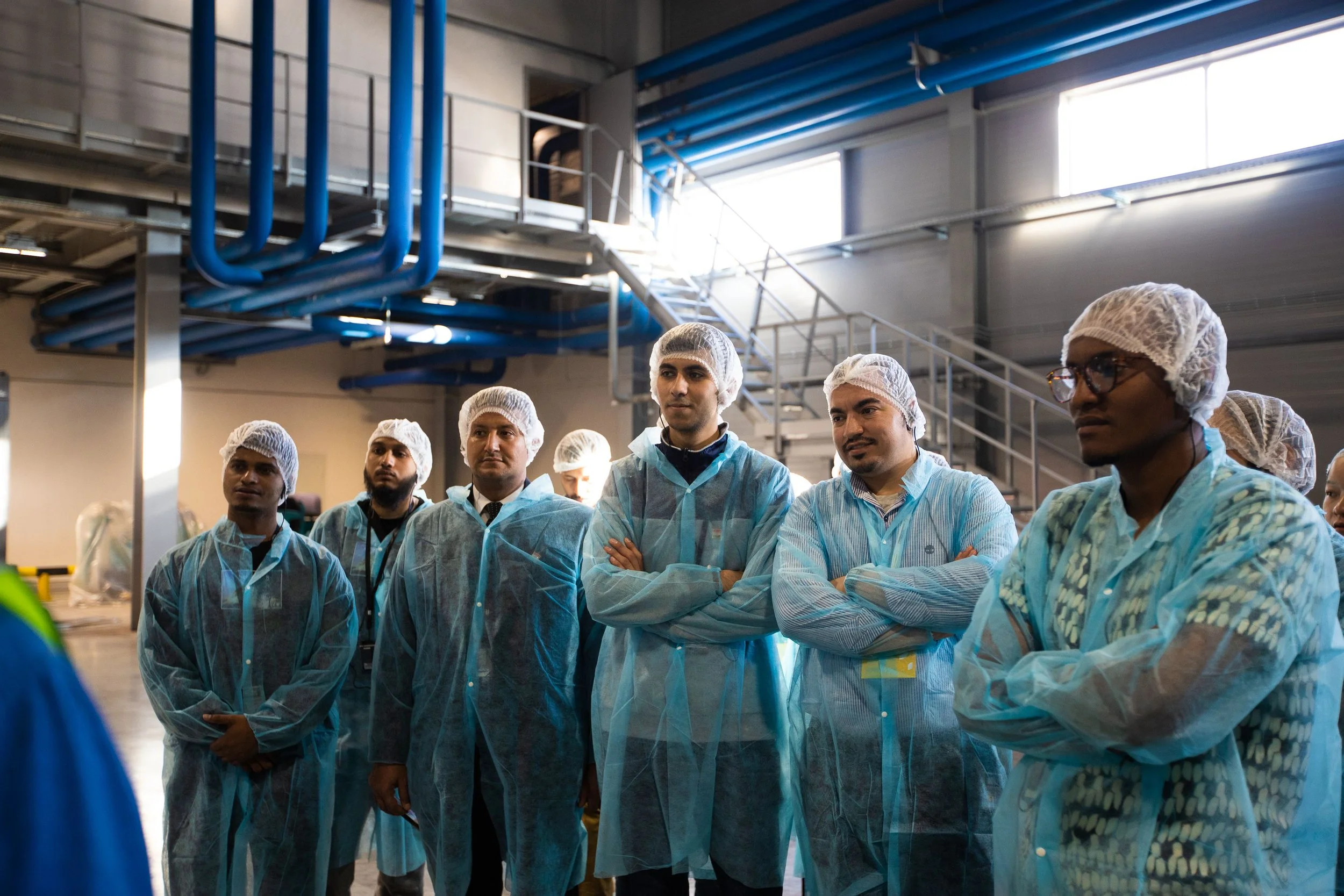
Across five separate productions, our team travelled throughout Norfolk, Suffolk and the wider East of England, filming everything from factory tours and specialist training sessions to networking events and major programme launches. This took us behind the scenes at organisations including Lotus, Proeon, and Berry Global (now Amcor), as well as events for the Tastebuds Collective and Made Smarter East of England.
Each production was different, requiring us to work closely with NAAME, participating businesses, event organisers and contributors to plan the filming, conduct interviews, and capture the people, environments, and activity that made each story worth telling.
The result was a varied collection of professional video content that allowed NAAME to showcase its work, promote the businesses and programmes within its network and extend the reach of events long after they had finished. For Treefrog, the project also demonstrated how thoughtful content creation and video production can turn the activity already happening within an organisation into valuable marketing content with a much longer lifespan.
ABOUT THE FILMING PROJECT
Rather than being one single production, our work with NAAME took us across a number of locations and organisations throughout the East of England.
At the beginning of the job, we worked with the project manager to discuss filming plans and budget, with an emphasis on choosing the best factory tours and networking events for the number of video shoots agreed upon.
Each project had its own purpose, audience, and filming requirements.
We filmed a LEAN training session at Lotus, captured a factory tour at Proeon within Hethel Engineering Centre, covered a Tastebuds Collective event at The Mix in Stowmarket, filmed a factory tour at Berry Global – now Amcor – and produced video content around the launch of the Made Smarter East of England programme at Newmarket Jockey Club.
The environments varied considerably.
One day, we could be filming group exercises and training activities at Lotus. Another could involve moving through a live manufacturing facility, capturing machinery, processes, and interviews. Other productions centred around networking events, presentations, keynote speakers and conversations between businesses.
That variety made the project a strong example of the role content creation can play across a wider programme of events and initiatives.
Rather than allowing the value of each activity to end when attendees went home, video provided NAAME with a way to document what happened, showcase the organisations involved and continue communicating the value of its work afterwards.
THE CHALLENGE
The biggest challenge across the project was that no two filming days were the same.
There was no fixed studio, controlled environment or repeatable production setup.
Every location introduced different practical and creative considerations, from lighting and acoustics to available filming space, access restrictions, event schedules and the realities of working inside operational businesses.
Factory environments required us to work safely around machinery and live processes while still capturing visually engaging footage.
Training sessions required a less intrusive approach, allowing participants to continue naturally while our team documented group activities, discussions and exercises.
Networking events demanded a different style again. Important moments could happen quickly and only once, meaning our videographers needed to anticipate conversations, presentations and interactions rather than rely on recreating shots afterwards.
Alongside this, every film still needed to communicate a clear story.
Simply recording what happened would not have been enough.
Each finished piece needed to explain why the activity mattered, who was involved and what audiences could take from it, while remaining consistent enough to sit alongside the wider collection of content produced for NAAME.
HOW WE FILMED IT
Our approach was built around understanding the purpose of each event before deciding how best to film it.
Rather than applying the same production formula to every location, we worked with NAAME, event organisers, business owners and participating organisations to understand what was happening, who would be attending and what the finished content needed to communicate.
From there, we planned the balance between interviews, pieces to camera, observational footage, presentations, and supporting B-roll.
Where interviews were required, we identified the people best placed to explain the subject and developed questions that would encourage useful, natural responses.
Where the activity itself was the main story, our focus shifted towards capturing the atmosphere, interactions and details that would allow viewers to understand what it felt like to be there.
This flexibility was particularly important because the films covered everything from advanced manufacturing facilities to training rooms and networking environments.
PRE-PRODUCTION
A successful filming day starts long before we arrive with the cameras. With five productions taking place across different businesses, venues and working environments, careful pre-production was essential to making sure we captured what we needed without disrupting the events, training sessions or businesses we were there to film.
For each project, we worked with NAAME and the organisations involved to understand what was happening on the day, who we needed to speak to and what story the finished content needed to tell. From schedules and interview questions to shot lists, equipment planning and location-specific considerations, we went into every shoot with a clear plan while leaving enough flexibility to respond to what was happening around us.
-
With productions taking place at Lotus, Proeon, Berry Global, The Mix and Newmarket Jockey Club, there was no single template that could simply be repeated from one filming day to the next.
Each shoot started with understanding the event or activity itself. We worked with NAAME, event organisers and the participating businesses to establish timings, locations, key contributors and the moments that were most important to capture.
Scheduling and coordination
We developed filming schedules around what was actually happening on each day, from presentations and factory tours to training activities, interviews and networking sessions.
Where multiple contributors were involved, interviews needed to be coordinated around their other commitments. At live events in particular, this meant identifying appropriate windows to take someone away for an interview without causing them to miss an important part of the programme.
We also established points of contact at each location so our production team knew who to speak to when arriving on site and could deal quickly with any changes to the planned schedule.
Interview planning and questions
Talking-head interviews played an important role across the films, but we didn't want every contributor giving the same generic answers.
Ahead of each production, we considered who we would be interviewing, their role within the organisation or event and what they could uniquely contribute to the story.
From there, we developed interview questions and talking points designed to draw out useful, natural responses.
For a factory tour, that could mean speaking to representatives from the host business about what they do and why they were opening their facility to other manufacturers, while attendees could provide a different perspective on what they had learned from the visit.
For Made Smarter, interviews needed to help explain the programme itself, the support available and why manufacturers across the East of England should engage with it.
Planning these conversations beforehand gave us direction while still allowing interviews to develop naturally on the day.
Shot lists and B-roll planning
Interviews alone wouldn't have been enough to tell these stories.
For each shoot, we considered the supporting footage required to visually demonstrate what contributors were talking about and give viewers a genuine sense of the environment.
At Lotus, that meant capturing the LEAN training exercises, group discussions, presentations and interaction between participants.
At Proeon and Berry Global, our requirements shifted towards manufacturing environments, machinery, facilities, processes, factory-tour activity and interactions between attendees.
For networking events, we needed establishing shots of the venue alongside speakers, presentations, conversations, audience reactions and the smaller details that help communicate the atmosphere of an event.
Creating these shot requirements in advance meant we weren't simply looking around for interesting things to film on the day. We knew the visual building blocks our editors were likely to need when constructing the finished videos.
Equipment planning
Different locations also required different production setups.
Ahead of each shoot, we considered the cameras, lenses, lighting, audio equipment and supporting production kit required for the environment we would be working in.
Interview setups needed reliable, high-quality audio and appropriate lighting, while event and factory coverage required equipment that allowed our videographers to move efficiently through changing environments and capture activity as it happened.
Planning the equipment around the location also meant bringing what we genuinely needed without unnecessarily slowing down production with equipment that wasn't appropriate for the shoot.
Working safely within manufacturing environments
Filming inside an operational factory presents considerations that simply don't exist when filming in an office or controlled studio.
Before and during factory shoots, we worked with the businesses involved to understand where we could safely operate, any areas where access was restricted and any specific site requirements our team needed to follow.
We also had to consider how equipment would be positioned and moved around active working environments, ensuring our filming didn't interfere with staff, machinery, walkways or the factory tours themselves.
There is a creative consideration here too. Some of the most visually interesting parts of a manufacturing facility can also be the areas where filming is most restricted or difficult. Good preparation meant we could work within those limitations while still finding the angles, details and activity needed to create engaging footage.
Planning for the unexpected
As important as all of that preparation was, live events and working businesses rarely run exactly to schedule.
Presentations overrun. Interviewees become unavailable. Factory tours move more quickly than expected. Rooms change. Lighting conditions vary. And sometimes an unexpected conversation or activity becomes one of the strongest moments of the entire film.
Our pre-production therefore wasn't about creating a rigid plan that had to be followed regardless of what happened.
It gave our team a framework.
By knowing the essential interviews, shots and story points we needed before arriving, our videographers could adapt confidently on location without losing sight of what the finished content ultimately needed to achieve.
FILMING FOR NAAME
Across the project, our production team filmed at five very different locations, from live manufacturing facilities and training environments to networking events and a major regional programme launch.
That variety meant there was no such thing as a typical filming day. We needed to adapt how we worked to suit each location while maintaining a consistent standard across the content we produced.
Our filming combined talking-head interviews, pieces to camera, presentations, speeches, group activities, networking and extensive B-roll. Rather than simply documenting what was happening, we were always thinking about the finished story: who could provide the strongest perspective, which moments would help communicate the purpose of the event and what supporting footage our editors would need to bring everything together afterwards.
Working with real businesses and contributors was also an important part of the process. Most of the people appearing on camera weren't professional presenters, so we took the time to explain what we were looking to achieve, talk contributors through the interview process and create an environment where they could speak naturally about their experience and expertise.
The locations themselves presented different challenges. Inside manufacturing facilities, we needed to work safely around operational environments while capturing machinery, processes and the scale of the businesses we were visiting. At live events, our team needed to work around fixed schedules and capture important moments as they happened, often with only one opportunity to get the shot.
Across every production, the aim was the same: capture enough strong interview and visual content to tell the story properly without getting in the way of the activity we were there to document.
-
Lotus – LEAN Training
At Lotus, we captured a live LEAN training session combining presentations, group exercises, discussions and practical activities.
Our approach was deliberately observational. The training needed to continue naturally around us, so rather than staging activity for the camera, we worked around the participants to capture genuine interaction throughout the session.
Alongside the training footage, we recorded talking-head interviews to provide context around the session, its objectives and what participants could take away from the experience. This gave us the narrative required to complement the more dynamic footage captured throughout the day.
Proeon – Factory Tour
At Proeon's facility within Hethel Engineering Centre, our focus shifted to capturing a working technical environment alongside the people taking part in the factory tour.
We filmed talking-head interviews with key contributors before capturing B-roll throughout the facility, including working environments, equipment, processes and interactions between those attending the tour.
The combination allowed the finished content to do two things: showcase Proeon and its expertise while also communicating the wider value of opening up manufacturing businesses for others within the sector to visit and learn from.
Tastebuds Collective – The Mix, Stowmarket
The Tastebuds Collective event at The Mix required a more traditional event-production approach.
Throughout the day, we captured speeches and presentations from participating businesses alongside talking-head interviews, audience footage, conversations and networking between attendees.
We also focused heavily on the smaller moments happening around the formal programme. People meeting, talking and exchanging ideas helped communicate the collaborative nature of the event and gave the finished content considerably more energy than presentations alone could provide.
Berry Global – Factory Tour
Our filming at Berry Global, now Amcor, took us across both office and operational manufacturing environments.
We followed the factory tour as it progressed through the site, capturing machinery, processes, facilities and the reactions and interactions of those attending.
Alongside this, we recorded interviews and conversations that helped provide context around the business and the purpose of the visit.
Filming within a live factory meant working efficiently and safely around normal operations while continually looking for the details and perspectives that would make the manufacturing environment visually interesting on screen.
Made Smarter East of England – Launch Event
For the launch of Made Smarter East of England at Newmarket Jockey Club, we needed to capture both the scale and atmosphere of the event and clearly communicate what the programme was actually there to achieve.
Our team filmed speeches, presentations, networking and wider event activity throughout the venue while also conducting interviews with key people involved in delivering and supporting the programme.
These interviews gave the finished film its narrative, while the wider event footage demonstrated the businesses, conversations and activity surrounding the launch.
Rather than producing a simple event highlights reel, this allowed us to create a piece of content that captured the day while continuing to explain and promote the Made Smarter programme after the launch had finished.
POST PRODUCTION AND EDITING
Once filming wrapped, we turned the hours of interviews, event coverage and B-roll captured across each location into polished, purposeful content. Using Adobe Premiere Pro, our editors reviewed and organised the footage, built each story around the strongest contributions and brought everything together with carefully selected B-roll, licensed music, branded graphics and titles.
But editing is about much more than choosing the best clips. From colour grading and audio clean-up to pacing, music selection and collaborative client reviews, every film went through a detailed post-production process before being approved and delivered.
-
Organising and reviewing the footage
Post-production starts with getting everything captured on location organised properly. Camera and audio files are backed up and structured before our editors begin reviewing the footage in detail.
With factory tours and live events generating hours of interviews, presentations, conversations and B-roll, this stage allows us to identify the strongest material and start determining how the finished story should come together.
Building the edit in Adobe Premiere Pro
We use Adobe Premiere Pro to edit our video projects.
For the NAAME films, we typically began by building the narrative around interviews, presentations and the key messages we wanted each piece to communicate.
Interviews aren't simply used in the order they were recorded. We work through each conversation, selecting the strongest responses, removing repetition and bringing different sections together to create a concise story that makes sense to someone who wasn't there on the day.
Once the narrative is established, we introduce B-roll captured throughout the production.
Factory machinery, manufacturing processes, training activities, speakers, networking, audience reactions and establishing footage can all be used to visually support what is being discussed and keep the finished film engaging.
Music and pacing
Music can completely change how a video feels.
We use Artlist to source professionally licensed music for our productions, selecting tracks that suit the organisation, subject matter and pace of the finished film.
The edit is then refined around the combination of dialogue, visuals and music, ensuring the film moves naturally without feeling unnecessarily rushed or drawn out.
Audio clean-up and mixing
Capturing interviews inside factories, event venues and other live environments can present very different audio challenges from filming in a controlled studio.
During post-production, interview audio is cleaned and balanced where required to improve clarity and consistency. Music levels are mixed around dialogue, and the different audio elements are brought together so that the finished video sounds professional across different devices and platforms.
Colour correction and grading
Footage captured throughout a filming day can involve dramatically different lighting conditions.
We might move from an office into a factory, then into a presentation space or outside the building, all within the same production.
Colour correction and grading allow us to balance those shots and create a more consistent visual finish across the video, while maintaining natural skin tones and the character of the location.
Graphics and branded elements
Where appropriate, we also introduce supporting graphics, titles, logos and name straps.
These elements help identify contributors, communicate additional information and ensure the finished content feels consistent with the organisation or campaign it represents without overwhelming the footage itself.
Collaborative review through Frame.io
Once we have a strong first version, the video moves into client review.
We use Frame.io to make this process straightforward and collaborative. Clients and relevant stakeholders can watch the edit online and leave comments directly against specific moments within the video.
This removes much of the ambiguity from traditional email feedback. Instead of trying to describe "the shot somewhere around two minutes in", comments can be attached directly to the relevant frame.
For projects involving multiple organisations and stakeholders, this also gives everyone a clear way to review the same version and consolidate feedback.
We then work through the agreed amendments before uploading an updated version for review where required.
Final checks and delivery
Once the edit has been approved, we carry out final quality checks across the picture, sound, graphics and overall edit before exporting the video in the formats required for its intended platforms.
By this point, hours of raw footage have been distilled into a concise piece of professional content with a clear narrative, consistent visual treatment and polished sound.
That's ultimately where the value of post-production lies: not simply editing footage together, but finding the story within everything we captured and turning it into something people will actually want to watch.
THE RESULT
As with many of our video projects, our aim wasn’t just to hand over some videos at the end of the project; it was to give our client valuable marketing materials that can be used over and over again.
Across the five productions, NAAME built up a substantial library of professional content that could continue to be used long after each event, factory tour or training session had finished.
The completed films gave the team evergreen content that could be shared across social media, websites, email campaigns, and wider digital marketing, allowing the conversations, expertise and activity captured on the day to reach a much larger audience than those who attended in person.
Just as importantly, we didn't treat the supporting footage as something that only existed to fill gaps within the final edits.
Across the different locations, we captured a large volume of additional B-roll showing manufacturing facilities, machinery, training activities, presentations, networking, speakers, attendees and the businesses themselves. We created an organised inventory of this footage for NAAME, giving their team access to a growing bank of professional visual content that could be returned to for future social posts, campaigns and other marketing assets.
This significantly increased the value of each production day.
Rather than commissioning a shoot and receiving one asset at the end of it, NAAME gained the finished video alongside a much broader library of reusable footage. A single filming day could therefore support the immediate campaign while also providing material for future communications weeks or months later.
For an organisation producing regular digital content, having that material readily available makes a significant difference. Instead of needing to organise a new shoot every time a social post, email campaign or website update requires strong visuals, the team can draw from an existing library of professionally captured footage.
It also creates greater consistency. Rather than relying on whatever photographs or phone footage happen to be available, NAAME has access to high-quality content captured specifically with marketing use in mind.
That is something we consider throughout our content creation process at Treefrog. When we're already on location with the crew, cameras, lighting and audio equipment in place, we want to make that opportunity work as hard as possible.
Capturing additional interviews, establishing shots, details and B-roll may only require a little more time on the day, but it can dramatically increase the amount of usable content a client receives from their investment.
The work also generated an unexpected result for Treefrog. By filming inside different businesses and working directly with the people involved, organisations were able to see first-hand how our team approached planning, production and working with contributors. Some of those introductions subsequently developed into new conversations and additional client work for us.
For NAAME, however, the lasting result was a versatile library of evergreen content rather than a collection of one-use videos – giving the team more ways to communicate its work, showcase the businesses within its network and get greater long-term value from every filming day.
SELECTED VIDEOS
ORGANISATIONS WE WORKED WITH
NAAME
.
MADE SMARTER
.
AMCOR
.
PROEON
.
LOTUS
.
TASTEBUDS COLLECTIVE
.
UEA
.
ETA
.
MUNTONS
.
NAAME . MADE SMARTER . AMCOR . PROEON . LOTUS . TASTEBUDS COLLECTIVE . UEA . ETA . MUNTONS .
THE VALUE OF PROFESSIONAL CONTENT CREATION
At Treefrog, we do more than turn up and film what happens.
We work with clients before production to understand what is taking place, identify the strongest stories and plan the content we need to capture.
For organisations running regular events, operating interesting facilities or sitting on expertise that their audiences rarely get to see, there is often far more content available than they realise.
Our job is to find it, capture it properly, and turn it into content worth using.
If video content is something you’re interested in, then contact us here, or via our form.